
The Republic’s Guardrail
Why our future depends on the difference between a democracy and a constitutional republic

The Ghost in the Machine
There is a ghost haunting the political systems of the modern world. It is a subtle specter, a fundamental misunderstanding that pits nations against themselves, turning citizens into warring tribes and transforming healthy debate into a zero sum battle for the soul of a country. This ghost animates the fierce divisions seen in the United States, the existential tensions straining the fabric of India, and the philosophical battles being waged for the future of France. It is the invisible force that fuels the anger in our streets and the gridlock in our halls of power. And its power comes from a single, potent, and widely held misconception: the belief that the will of the people is the highest law of the land.
This is the seductive and dangerous allure of pure democracy. The idea that a majority, by virtue of being a majority, has a righteous mandate to govern as it sees fit is perhaps the most powerful force in politics. Yet, the great and enduring nations we admire were never designed this way. The United States, India, and France are not, in the strictest and most vital sense of the term, democracies. They are constitutional republics. This is not a trivial distinction; it is the entire architecture. It is the load bearing wall that prevents the house from collapsing under the weight of popular passion. A democracy is ruled by the majority. A constitutional republic is ruled by a charter, a supreme law that stands above every citizen, every politician, and every majority, guaranteeing that the fundamental rights of all are protected from the potential tyranny of any.
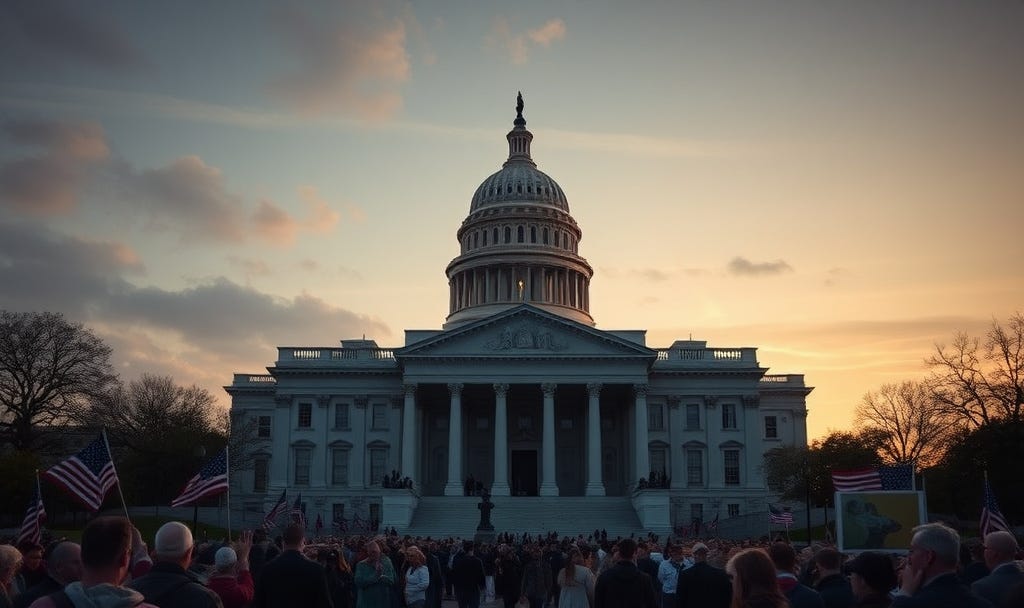
Overlooking this is the original sin of our modern political discourse. It fuels a fiery entitlement, a belief that an election victory grants the winners unchecked power to remake society in their image. It springs from a twofold crisis: a deep and widespread ignorance of the civic mechanics that govern us, and the cynical pandering of elected officials who find it far easier to rally a majority base with promises of total victory than to educate them on the virtues of restraint. For our world to progress, for our societies to heal, this has got to stop. And to understand why, we must look to a courtroom in India half a century ago, where one of the most important legal battles of all time unfolded, a battle that drew a line in the sand between the will of the people and the soul of a nation.
The year was 1973. The Prime Minister of India, Indira Gandhi, was at the zenith of her power. Riding a wave of populist support after a decisive military victory and campaigning on the magnetic slogan of Garibi Hatao (Abolish Poverty), she commanded a supermajority in Parliament so vast it could, in theory, do anything it wished. Her government had already passed a series of constitutional amendments that swept away fundamental rights, particularly the right to property, in the name of the public good. One amendment even sought to place all constitutional changes beyond the scrutiny of the courts. The message was clear and potent: Parliament, as the embodiment of the people’s will, was supreme. No dusty legal document, no unelected judge, could stand in the way of its mandate to build a new India.
The question fell to the Supreme Court of India in the case of His Holiness Kesavananda Bharati Sripadagalvaru and Ors v. State of Kerala. The petitioner was a Hindu monk, the head of a religious institution whose land had been targeted by government reforms. But the case quickly grew far beyond a simple property dispute. The core question became staggeringly profound: Is there any limit to Parliament’s power to amend the Constitution? Could a two thirds majority, for instance, vote to abolish elections, eliminate free speech, or dissolve the judiciary itself? Could it, in effect, use the rules of the constitutional game to burn down the entire stadium?
What followed was a legal epic. For 68 days, the longest hearing in India’s history, a special bench of thirteen judges, the largest ever convened, listened to arguments that would define the fate of the Republic. The air in the courtroom crackled with existential tension. On one side stood the argument for parliamentary sovereignty, the idea that the elected representatives of the people were the ultimate authority. On the other stood the fragile, profound argument that the Constitution had a soul, a “basic structure,” that could not be desecrated, no matter how large the majority.
When the verdict finally came, it was a thunderclap delivered on a razor’s edge. By a margin of a single vote, 7 to 6, the Court declared that while Parliament had the power to amend the constitution, it did not have the power to destroy it. It ruled that certain fundamental features of the Constitution, its basic structure, were inviolable. What were these features? The Court identified several, including the supremacy of the Constitution, the republican and democratic form of government, the secular character of the nation, the separation of powers between the branches of government, and the federal structure. In a single, breathtaking judgment, the Indian judiciary declared that it, not the legislature, was the final guardian of the constitutional compact. It asserted that the rule of law, not the will of the majority, was the nation’s supreme guiding star. A temporary majority, no matter how powerful, could not legislate the Indian Republic out of existence.
This monumental decision, the Basic Structure Doctrine, is perhaps the single most important contribution of the Global South to constitutional law. It is the ultimate expression of the philosophy of the constitutional republic. It acknowledges that yes, the people speak through elections, but that their collective voice is bound by the enduring principles they laid down for themselves in their founding document. The legislature has the power to act, but the judiciary has the final say on whether that action conforms to the nation’s unalterable identity.
The drama that played out in India is the central drama of our time, and it echoes across the globe. In the United States, the founding fathers were so deeply fearful of pure democracy that they engineered a complex system of checks and balances. These included an Electoral College, a powerful Senate where states are represented equally regardless of population, and a Bill of Rights, all designed specifically to curb the passions of the majority. James Madison, the chief architect of the U.S. Constitution, warned explicitly that in a pure democracy, "there is nothing to check the inducements to sacrifice the weaker party or an obnoxious individual." The American system was designed to be a republic, with a judiciary that, through the power of judicial review established in Marbury v. Madison, acts as the final arbiter of what the Constitution means.
In France, the ideal is an “indivisible, secular, democratic, and social Republic.” The powerful principle of laïcité, a strict secularism that creates a firewall between church and state, is not just a policy choice; it is a foundational constitutional commitment designed to ensure absolute equality before the law for every citizen. It is a principle that cannot be voted away by a religious majority or a populist movement. The French Constitutional Council stands guard, reviewing legislation to ensure it does not violate these core tenets.
Yet today, in all three republics, these guardrails are under relentless assault. Populist leaders frame politics not as a negotiation under a shared constitutional framework, but as an existential battle between "the people" and a "corrupt elite" who use courts and constitutions to thwart their will. Social media algorithms create echo chambers that amplify a sense of majoritarian righteousness, making compromise feel like treason and constitutional constraints seem like anachronistic obstacles.
This long read is an attempt to put the ghost back in the bottle. To do so, we will embark on a journey. First, we will travel back to the philosophical origins of these ideas, examining the Athenian warning against pure democracy and the Roman blueprint for a balanced republic that so heavily influenced the Enlightenment thinkers. We will then dive deep into the specific architecture of our three chosen nations, the United States, India, and France, to understand the unique history and design choices that made them constitutional republics, with a special focus on the role their judiciaries were built to play. Finally, we will confront the modern battleground, analyzing the psychological appeal of populism and the concerted attacks on the very institutions designed to protect us from our worst impulses.
This is not an academic exercise. It is a plea for a renewed civic consciousness, a call for a constitutional patriotism that places its faith not in the fleeting mandate of a majority, but in the enduring wisdom of the rule of law. The world’s most stable, prosperous, and just societies did not arise by accident. They were carefully designed to protect liberty from power. Understanding that design, and defending it, is the single most important task of our time.
Part I: The Philosophical Foundations
Before a single line of a constitution can be written, before a cornerstone can be laid for a parliament building, the ideas that animate a republic must be forged. They are not born in moments of quiet consensus but are hammered out in the crucible of failed experiments, civilizational collapse, and intense philosophical debate. The architects of the world's great constitutional republics were not inventing from whole cloth; they were students of history, keenly aware that they stood on the shoulders of giants and atop the ruins of failed states. To understand the profound choices they made in crafting the systems of India, France, and the United States, we must first walk through the academy of the past and learn the lessons that were paid for so dearly in blood, stone, and ink. The first and most important of these lessons came from a glorious, brilliant, and ultimately doomed city state: Athens.
The Athenian Warning: The Allure and Peril of Pure Democracy
There is a reason we are still captivated by Athens. For a fleeting, miraculous period, this small city state produced a cultural and intellectual explosion that would define the very course of Western civilization. It gave us tragedy, comedy, history, philosophy, and its most seductive and radical political invention: dēmokratia, rule by the common people.
This was democracy in its rawest and most direct form. The central institution was the Assembly, the ekklesia, which met on a hillside called the Pnyx. Any adult male citizen, be he a wealthy landowner or a humble potter, could attend, speak, and vote directly on the most important issues of the day. They decided on laws, set budgets, and made the fateful choices of war and peace. Their system was built on two revolutionary pillars: isonomia, equality before the law, and isēgoria, the equal right of every citizen to address the Assembly.
The soaring ideal of this system was best articulated by its greatest champion, Pericles, in his famous Funeral Oration. He praised a city where "power is in the hands not of a minority but of the whole people," where a citizen's value was not determined by their social class but by their talent, and where an open and tolerant society was defended by citizens who participated in public life not out of compulsion but out of a shared sense of duty. To the Athenian mind, their democracy was not just a political system; it was a mark of moral and cultural superiority. It was what made them free.
But this beautiful ideal concealed a fatal flaw. In its absolute faith in the wisdom of the masses, Athenian democracy lacked any effective guardrails against the three great human weaknesses: passion, ignorance, and ambition. The very system that empowered the citizen also created the perfect environment for the demagogue. Without constitutional limits, without an independent judiciary to check its power, the Assembly was little more than a mob, albeit a highly eloquent one. And like any mob, it could be swayed, deceived, and whipped into a frenzy that would lead the city to ruin.
The historical record is littered with the tragic results. Consider the Mytilenian Debate in 427 BC. The city of Mytilene, a subject ally, had revolted against Athenian rule. After suppressing the revolt, the enraged Athenian Assembly, spurred on by the hawkish speaker Cleon, voted to make a horrific example of them. They passed a decree to execute all adult men in Mytilene and to sell the women and children into slavery. A ship was dispatched to carry out the order. Overnight, a collective sense of shame and horror gripped the city. A second debate was held the next day, and after a passionate plea for reason by a speaker named Diodotus, the Assembly narrowly reversed its decision. A second ship was sent out, racing against time to overtake the first and prevent the massacre. It arrived just as the original orders were about to be carried out. Athens had stepped back from the brink, but the lesson was terrifying. The will of the people had, for a full day, been genocidal. Raw democracy had proven itself capable of monstrous cruelty.
This susceptibility to emotional and charismatic persuasion led directly to the city's greatest geopolitical disaster: the Sicilian Expedition. In 415 BC, the Assembly was captivated by the dashing, wealthy, and dangerously ambitious general Alcibiades. He proposed a massive military campaign to conquer the island of Sicily, promising the people unimaginable wealth and glory. The more cautious general, Nicias, argued passionately against the venture, laying out the immense risks and logistical challenges. But his sober realism was no match for Alcibiades’s dazzling rhetoric. The Assembly voted overwhelmingly for the expedition. The result was a catastrophe of stunning proportions. The Athenian army and navy were completely annihilated, thousands of citizens were killed or enslaved, and the city state was left so weakened that it never fully recovered its power. A single vote, driven by popular greed and the charisma of a demagogue, had crippled a civilization.
The most profound indictment of the system, however, came not on the battlefield but in a courtroom. In 399 BC, the philosopher Socrates, a man whose entire life was devoted to questioning authority and pursuing wisdom, was put on trial. His charges were impiety and corrupting the youth. His real crime, of course, was making the powerful men of Athens look foolish and forcing ordinary citizens to confront their own ignorance. He was a gadfly, a relentless questioner in a society that preferred the comfort of consensus. A jury of 501 of his fellow citizens found him guilty, and he was sentenced to death by drinking hemlock. The verdict was a defining moment in history. The freest city in the world had used its own democratic mechanisms to murder its greatest thinker simply because he was a dissenting minority of one.
It was this series of failures that produced the West's first and most devastating critiques of democracy, written by the very men who had witnessed its pathologies firsthand. Socrates's student, Plato, was so disgusted by his mentor’s execution that he came to see democracy as one of the worst forms of government. In his masterpiece, The Republic, he presents the famous analogy of the "ship of state." Imagine a ship whose owner is a bit deaf and shortsighted. The crew, the sailors, are all quarreling over who should be captain, even though none of them has ever studied the art of navigation. They do not believe navigation can even be taught. Instead, they cluster around the owner, drugging and flattering him, and declare whoever is best at manipulating him to be the "true navigator." The actual navigator, the one who spends his time studying the stars and the winds, is dismissed as a useless stargazer.
For Plato, the state was this ship. The owner was the common people, powerful but easily misled. The sailors were the ambitious and manipulative politicians, the demagogues. The true navigator was the philosopher king, the one who possessed actual knowledge of justice and goodness. Democracy, in Plato's view, was a system that handed control of the ship to the flattering sailors, guaranteeing it would eventually crash on the rocks. It was a government based on fleeting opinions, not on eternal truths. Inevitably, he argued, the license and chaos of democracy would lead the people to crave a strongman to restore order, causing it to devolve into its final and most wicked form: tyranny.
Plato's student, Aristotle, was more methodical and less scornful, but he arrived at a similar conclusion. He famously categorized governments based on who rules and in whose interest. The rule of one could be good (monarchy) or bad (tyranny). The rule of a few could be good (aristocracy) or bad (oligarchy). And the rule of the many could be good (what he called "polity") or bad (democracy). For Aristotle, the key difference between a good polity and a deviant democracy lay in the object of its rule. A polity was a constitutional government that ruled for the common good of all citizens. A democracy, he warned, was a system where the poor majority used its numerical advantage to rule in its own interest, primarily by seizing the property of the wealthy minority. This would inevitably lead to class warfare, instability, and injustice.
The Athenian experiment, therefore, ended not with a whimper but with a powerful, echoing warning. It taught the world that liberty and majority rule are not the same thing. It showed that without structural safeguards, without a deep respect for law that transcends popular opinion, and without institutions designed to temper public passion and protect minority rights, democracy will consume itself. The ghost of Socrates, condemned by the will of the people, would haunt future generations of thinkers as they searched for a new blueprint, one that could harness the power of the people without unleashing its destructive potential. That search would lead them to Rome.
The Roman Blueprint and the Renaissance Thinkers
If Athens gave the world the beautiful, flawed ideal of democracy, Rome gave the world the pragmatic, durable machinery of the republic. For nearly five hundred years, while other city states succumbed to tyrants or were conquered, the Roman Republic endured and expanded, creating a legal and political framework that remains the bedrock of Western governance. The Romans were not philosophers like the Greeks; they were engineers, soldiers, and lawyers. They looked at the chaos of Greek democracy and built a system designed for one purpose: stability.
Their great innovation was the idea of a mixed government. They instinctively understood that power was dangerous and that the only way to control it was to set it against itself. They therefore blended the three "good" forms of government that Aristotle had identified into a single, complex system. They had a monarchic element in their two Consuls, who were elected annually and commanded the armies, but whose power was checked because there were two of them and they could veto each other. They had an aristocratic element in their Senate, an assembly of the nation's elder statesmen and former magistrates who managed the treasury and foreign policy, providing a source of experience and continuity. And they had a democratic element in their popular assemblies, which elected officials, and most importantly, in the office of the Tribune of the Plebs. The Tribunes were elected by the common people and had the extraordinary power to veto any act of the Senate or the Consuls that they felt harmed the citizenry.
The Greek historian Polybius, who lived in Rome as a hostage, was in awe of this design. He argued that it was the source of Rome's incredible strength. In his analysis, all simple forms of government were doomed to a predictable cycle of decay he called anacyclosis. Monarchy corrupts into tyranny; tyranny is overthrown by the best men, creating an aristocracy; aristocracy corrupts into oligarchy; oligarchy is overthrown by the people, creating a democracy; democracy, as seen in Athens, decays into mob rule, which then calls for a strongman to restore order, starting the cycle all over again with monarchy. Rome, Polybius argued, had broken this cycle. By having the Consuls, Senate, and Tribunes in a constant state of productive tension, each checking the ambitions of the others, the Roman Republic had achieved a state of political equilibrium. No single faction could gain total control.
This system, the res publica or "the public thing," was not about realizing the direct will of the people on any given day. It was about creating a framework of law and interlocking powers to pursue the long term good of the state. It was a government of laws, not of men. But the Roman Republic also left us with a second, equally important lesson: its spectacular collapse. The very success that its constitution brought it, a vast empire stretching from Britain to Mesopotamia, eventually destroyed it. The machinery of a small city state could not govern a global power. Ambitious generals like Julius Caesar, commanding loyal professional armies on distant frontiers, grew more powerful than the Senate back home. Class tensions between the super wealthy and the dispossessed urban poor exploded into civil war. Political norms that had held the system together for centuries were shattered by men who prioritized personal ambition over the public good.
The Republic’s fall into the autocracy of the Roman Empire was a tragic lesson that even the most brilliantly engineered political machine is not enough. A republic also requires a certain kind of citizen: one who possesses civic virtue, respects the rule of law, and is willing to compromise for the sake of the common good. When that virtue decays, the machine breaks down.
For over a thousand years following the fall of Rome, the republican ideal lay mostly dormant in Europe, eclipsed by feudalism and absolute monarchy. It flickered briefly in the Italian city states of the Renaissance, like Florence, where Niccolò Machiavelli would study the hard realities of power with a clear and cynical eye. But it was not until the 17th and 18th centuries, in the intellectual ferment of the Enlightenment, that these classical ideas were fully reawakened and repurposed for the modern world.
Three thinkers in particular took the raw materials left by Greece and Rome and refined them into the core principles that would underpin the great modern republics.
First came the Englishman John Locke. Writing in the aftermath of his country's own civil wars, Locke introduced a truly revolutionary idea: that human beings possess natural rights. These rights, primarily to life, liberty, and property, do not come from a king or a government. They exist in a "state of nature," given by God or reason, before any government is ever formed. People, he argued, create governments through a social contract for one specific purpose: to secure and protect these pre existing rights. This flipped the entire theory of governance on its head. It meant that government was not the master of the people but their servant. Its power was not absolute but strictly limited to its designated purpose. And if a government ever violated this contract and trampled on the natural rights of the people, the people had the right to alter or abolish it. With this, the idea of limited government, founded on the consent of the governed, was born.
Next was the French nobleman Baron de Montesquieu, a devoted student of the Roman Republic. In his monumental work, The Spirit of the Laws, he diagnosed the central cause of tyranny. "Constant experience shows us," he wrote, "that every man invested with power is apt to abuse it... It is necessary from the very nature of things that power should be a check to power." His solution was not just the Roman idea of a mixed government, but a more surgical and complete separation of powers. He argued that the functions of government should be divided into three distinct branches: the legislative, which makes the laws; the executive, which enforces the laws; and the judicial, which interprets the laws. By placing these powers in separate and competing institutions, a system of checks and balances could be created. The legislature could pass laws, but the executive could veto them. The executive could command the armies, but the legislature had to fund them. And an independent judiciary could ensure that both of the other branches acted according to the fundamental laws of the land. This was the architectural blueprint for the constitutional state, the practical engineering required to build the guardrails that Athens so desperately lacked.
Finally, there was the brilliant and controversial Jean-Jacques Rousseau. While Locke and Montesquieu were focused on limiting power, Rousseau was captivated by a different idea: the source of political legitimacy. In his book, The Social Contract, he argued that true freedom was not being free from laws, but obeying only laws that one had given to oneself. A legitimate state, therefore, must be guided by the "general will" of the people. This was not simply the sum of all individual desires, but the collective good, the common interest of the political community. Rousseau’s idea of popular sovereignty was profoundly democratic, but it also contained a dangerous seed. He argued that anyone who refused to obey the general will should be "forced to be free." In the hands of radical revolutionaries, this could be used to justify a new kind of tyranny, one cloaked in the language of the people’s will. It could empower a majority to crush all dissent in the name of the collective, creating a secular version of a state with the infallibility of a church.
By the late 18th century, the stage was set. The philosophical toolkit was complete. From Athens came the clear and urgent warning of unchecked majority rule. From Rome came the template of a stable, mixed republic built on the rule of law. From Locke came the moral foundation of natural rights and limited government. From Montesquieu came the engineering diagram for the separation of powers. And from Rousseau came the powerful, and potentially perilous, ideal of popular sovereignty. It was with this rich, complex, and often contradictory inheritance that a new generation of founders in America, and later in France and India, would begin their own great experiment: the attempt to build a government that was of the people, for the people, and by the people, while ensuring it would never become a weapon in the hands of the people.
Three Republics, One Ideal
History offers no clean slates. When the founders of the United States, India, and France sat down to design their nations, they were not just philosophers; they were pragmatists haunted by the ghosts of the past. The Americans were fleeing a monarchy they viewed as tyrannical. The French were trying to build a stable order from the ashes of their own bloody revolution. The Indians were tasked with creating a unified nation in the wake of colonial subjugation and the unimaginable trauma of religious partition.
In these radically different contexts, they could have chosen any number of paths. Yet each, in its own way, rejected the siren song of pure democracy that had echoed from ancient Athens. They chose instead the more difficult, more complex, and ultimately more durable path of the constitutional republic. They did not trust the unrestrained will of the people any more than they trusted the unrestrained will of a king. Their faith was placed in a different authority: the enduring supremacy of law. The stories of their creations are not just history lessons; they are masterclasses in the architecture of freedom.
Chapter 3: The United States: A Republic ‘If You Can Keep It’
When the delegates gathered in Philadelphia during the sweltering summer of 1787, the new nation they had helped create was on the verge of collapse. The first American government, the Articles of Confederation, had been a weak alliance of thirteen sovereign states. It was too decentralized to manage the economy or defend the nation. Shay’s Rebellion, an armed uprising of indebted farmers in Massachusetts, had recently exposed the fragility of the new country and terrified its propertied elites. The delegates knew they needed a stronger national government, but they were possessed by a deep and abiding fear, a fear born directly from their study of history: the fear of power, especially the power of a popular majority.
These were not men who believed in the innate wisdom of the crowd. They were children of the Enlightenment who had read Locke and Montesquieu, and more importantly, they had read their Gibbon and their Thucydides. They knew what had happened to Athens and to Rome. Edmund Randolph of Virginia spoke for many when he traced the nation’s problems to the "turbulence and follies of democracy." Elbridge Gerry of Massachusetts declared that the evils they experienced flowed from "the excess of democracy." The Convention's main purpose, as Alexander Hamilton would later argue, was to create a government that could check "the imprudence of democracy."
Their solution was a work of political engineering genius, an intricate system of gears and levers designed to filter, slow, and constrain popular will. As the story goes, upon emerging from Independence Hall at the end of the convention, a woman asked Benjamin Franklin what they had created. His reply was both a statement of fact and a perpetual challenge: "A Republic, madam, if you can keep it." The very structure of the document they wrote reveals this deep republican, rather than democratic, bias.
First, they explicitly rejected a national popular vote for president. Instead, they created the Electoral College, a complex mechanism that gives power to states as political units. It was designed as a buffer between the population and the selection of the chief executive, intended to ensure that a candidate with intense, geographically concentrated support could not overwhelm a candidate with broader, but less passionate, national appeal.
Second, they created a legislature of two competing houses. The House of Representatives was the more democratic body, with members elected every two years directly by the people. But its power was checked by the Senate. Senators were originally chosen not by the people but by state legislatures, and they served for long, six-year terms. The Senate was designed to be the "saucer" that cooled the hot tea of the House, a more deliberative, aristocratic body meant to protect the rights of property and the interests of the smaller states against the passions of the larger ones.
Third, and perhaps most crucially, they attached a Bill of Rights to the Constitution. The first ten amendments are a remarkable declaration of what the government, even with a massive popular majority behind it, is forbidden from doing. A majority cannot establish a national religion, it cannot abolish the freedom of speech or the press, and it cannot take away a citizen's right to due process of law. These rights were deemed to be natural and inalienable; they were placed beyond the reach of any vote.
But even this intricate system of checks and balances was missing a final, critical piece: a referee. What would happen if the legislature passed a law that violated the Bill of Rights? The Constitution itself was silent on who had the final say. It was into this void that the third branch, the judiciary, would step, and in doing so, complete the architecture of the American Republic.
The moment came in 1803 in the landmark case of Marbury v. Madison. The case arose from a messy political transition, but the underlying issue was monumental. Could the Supreme Court, a body of unelected judges with lifetime appointments, declare an act of the democratically elected Congress to be unconstitutional and therefore void? In a masterful opinion, Chief Justice John Marshall, a staunch federalist, answered with a resounding yes. He argued that the very nature of a written constitution requires that it be the "fundamental and paramount law of the nation." If the legislature could pass laws that contradicted the constitution, then the constitution itself was meaningless. "It is emphatically the province and duty of the judicial department," Marshall famously wrote, "to say what the law is."
With that single sentence, the principle of judicial review was born. Marshall had effectively claimed the role of ultimate guardian of the constitution for the Supreme Court. The elected representatives of the people in Congress could speak, but the unelected justices on the Court would have the final word on whether what they said was permissible under the nation's supreme law. This was the final, and perhaps most powerful, guardrail against the tyranny of the majority.
The American founders designed a system meant for the long haul. They understood that public opinion is fickle and that popular passions can be dangerous. They therefore placed their faith in structure and law, creating a republic where power was divided, ambition was made to counteract ambition, and an independent judiciary stood watch over the entire edifice. Yet, as Franklin warned, keeping this republic is a constant challenge. Today, this intricate machinery is under immense strain. As political polarization deepens, every branch of government, especially the judiciary, is increasingly seen not as a neutral arbiter but as just another political team. Declining trust in institutions and a growing civic ignorance threaten to erode the very foundations the founders so carefully laid.
India: Constitutionalism as the Ark of Diversity
If the American founders were fleeing a distant king, the architects of the Indian Constitution were facing a challenge of infinitely greater complexity. On August 15, 1947, India awoke to freedom, but it also awoke to a bloodbath. The partition of the subcontinent into a Muslim-majority Pakistan and a Hindu-majority India had unleashed a tidal wave of sectarian violence, leaving up to two million people dead and displacing fifteen million more. The men and women of India's Constituent Assembly gathered in New Delhi haunted by this carnage. Their task was not just to write a constitution; it was to build an ark, a legal vessel strong enough to carry a dizzying array of religions, languages, and cultures safely through the stormy waters of democracy.
They knew, with a certainty born of tragedy, that a simple majoritarian democracy would be a death sentence for the new nation. In a country where nearly 80% of the population was Hindu, an unrestrained "will of the people" would inevitably become the will of the Hindu majority, threatening the rights and very existence of its vast Muslim, Christian, Sikh, and other minorities.
The intellectual and moral giant of this assembly was Dr. Bhimrao Ramji Ambedkar. Ambedkar's presence was a revolution in itself. Born an "untouchable" (Dalit), he had spent his life battling the profound injustices of the Hindu caste system. He had risen through sheer brilliance and determination to become one of the world's most learned legal scholars. No one understood the potential for majoritarian tyranny better than he did. He knew that the formal equality of "one person, one vote" meant little in a society deeply fractured by ancient hierarchies.
For Ambedkar, the Constitution was not merely a political document; it was a tool for social revolution. He was a fierce critic of what he called "the grammar of anarchy," the tendency to place popular protests and political passions above the rule of law. The survival of India, he argued, depended on cultivating "constitutional morality," a deep and abiding respect for the forms and procedures of the Constitution, even and especially when they were inconvenient. "The maintenance of democracy," he warned, "requires a passion for the maintenance of its form."
Under his chairmanship, the Assembly crafted one of the longest and most detailed constitutions in the world, a document explicitly designed to constrain the majority and protect the vulnerable. The guarantees for minorities were woven into its very fabric. Article 25 grants freedom of conscience and the right to freely profess, practice, and propagate religion. Articles 29 and 30 give linguistic and religious minorities the explicit right to conserve their culture and establish their own educational institutions. These were not concessions; they were foundational pillars of a pluralistic republic. Above all, the Constitution established India as a secular state, a commitment that was later made explicit in the Preamble. This was not secularism in the sense of being anti-religion, but a promise that the state would remain neutral, favoring no religion over another, thereby guaranteeing the safety of all.
But like their American counterparts, the Indian framers knew that these written guarantees were worthless without a guardian. They created an independent judiciary and gave the Supreme Court the power of judicial review. And in 1973, that judiciary would face its ultimate test in the case that would come to define modern Indian constitutionalism: Kesavananda Bharati v. State of Kerala.
The political context was explosive. Prime Minister Indira Gandhi, wielding a massive parliamentary majority, had embarked on a populist-socialist program that involved systematically amending the constitution to override fundamental rights, particularly the right to property. Her government’s position was simple and politically popular: Parliament represents the will of the people, and therefore, its power to amend the constitution is unlimited. It could add, alter, or repeal any part of it.
The case, argued over five long months before a special 13-judge bench, put the entire soul of the Indian Republic on trial. Could a majority in Parliament effectively write a new constitution, one that eliminated fundamental rights or dismantled democracy itself? By the slimmest of margins, 7 to 6, the Court delivered a verdict that would forever change the balance of power in India. It created the "Basic Structure Doctrine." The Court agreed that Parliament could amend the Constitution, but it could not use that power to alter or destroy its fundamental identity. The core pillars of the republic—its democratic character, its secular fabric, the rule of law, the separation of powers, and critically, the independence of the judiciary and its power of judicial review—were sacrosanct and beyond the reach of any legislative majority.
The Kesavananda Bharati case was the Indian judiciary’s Marbury v. Madison, but it went even further. It was a self-conscious assertion by the Court that it was the ultimate protector not just of the letter of the Constitution, but of its very spirit. The will of the people, as expressed through Parliament, was powerful, but the fundamental character of the republic was paramount.
Today, this foundational doctrine is facing its most significant challenge. The rise of a powerful Hindu nationalist movement is putting immense pressure on India's secular commitments and the rights of its religious minorities. The very idea of the Basic Structure is often attacked by those in power as being undemocratic, a judicial overreach that thwarts the mandate of the people. The future of India as a pluralistic, constitutional republic may very well depend on whether its judiciary can continue to hold the line drawn in 1973.
France: The Uncompromising Ideal of Laïcité
The French path to a stable republic was perhaps the most violent and convoluted of all. For nearly a century after its 1789 revolution, France cycled chaotically between republics, monarchies, and empires. Unlike the Americans, who sought to limit government power, the French republican tradition, stemming from Rousseau, embraced the idea of a powerful, unified state as the embodiment of the "general will." The goal was not just to protect individual rights from the state, but to use the state to forge a new kind of citizen, one liberated from the old loyalties of religion, class, and region.
This quest for stability and unity culminated in the creation of the French Fifth Republic in 1958 under the leadership of Charles de Gaulle. The constitution of the Fifth Republic establishes France as an "indivisible, secular, democratic, and social Republic." Of all these terms, the most important and the most uniquely French is laïque, or secular.
French laïcité is profoundly different from the American or Indian models of secularism. It is not about a "wall of separation" that protects religion from the state. It is about a wall that protects the state from religion. It is a powerful, assertive, and constitutionally mandated principle that seeks to remove religion entirely from the public sphere in order to create a space of pure and equal citizenship. In a public school, a courthouse, or a government office, a citizen is not a Catholic, a Jew, or a Muslim; they are simply French. The state must be absolutely neutral, and to guarantee this neutrality, religious expression is confined to the private realm of home, church, synagogue, or mosque.
This is the ultimate republican solution to the problem of religious diversity and potential sectarian conflict. Instead of trying to manage group rights, as India does, the French model seeks to transcend them entirely, creating a common civic identity that overrides all other affiliations. Laïcité is therefore the central pillar of the French constitutional order, a foundational principle that cannot be compromised by the demands of any religious majority or minority.
The guardian of this order is the Conseil Constitutionnel, or Constitutional Council. While it functions as France's highest constitutional authority, it operates differently from the Supreme Courts of the US and India. A key power of the Council is its ability to review legislation before it is signed into law. This a priori review allows it to act as a preventative guardrail, striking down proposed laws passed by Parliament if they are deemed to violate the fundamental principles of the Republic, especially laïcité. For instance, the Council has been central in upholding laws that ban conspicuous religious symbols, such as the Islamic headscarf, in public schools and the full-face veil in public spaces, arguing that these measures are necessary to uphold the constitutional principles of secularism and public order.
The French system is a bold and uncompromising vision of the constitutional republic. It places the abstract ideal of the universal citizen, equal before a neutral state, as its highest value. But this rigid model is now under severe strain. The challenges of integrating a large Muslim population, coupled with the threat of Islamist terrorism, have created fierce debates over the meaning and fairness of laïcité. Populist leaders, both on the far-right and the far-left, increasingly exploit these tensions, attacking the constitutional order as an out-of-touch elite project that fails to respect the identity and will of "the real people." The French Republic, built on the ideal of transcending identity, now finds itself in a desperate battle against the rise of the very identity politics it was designed to prevent.
Part III: The Modern Battleground
The grand architecture of the constitutional republic, so carefully designed by the framers in Philadelphia, New Delhi, and Paris, was built to withstand political storms. The system of checks and balances, the separation of powers, and the guarantee of fundamental rights were all engineered to be durable. But no blueprint, however brilliant, can account for a fundamental shift in the climate itself. Today, the republican ideal is weathering a perfect storm, a confluence of psychological, technological, and political forces that are eroding its very foundations.
The conflict has moved from the pages of history books and constitutional law journals into our daily lives, playing out in our social media feeds, our political rallies, and our dinner table arguments. We now find ourselves on a modern battleground where the very idea of restraint, of limited government, of a law that stands above the will of a temporary majority, is portrayed not as a virtue but as a betrayal. To understand how to defend the republic, we must first understand the nature of the weapons being used against it.
The Psychology of Entitlement: Why We Crave a Majority's Mandate
At its heart, the appeal of raw democracy is not logical; it is emotional. The human mind is drawn to simplicity, to clear narratives of good versus evil, and to the powerful, affirming feeling of belonging to a righteous tribe. The constitutional republic, with its complex procedures, its celebration of compromise, and its demand that we respect the rights of those with whom we profoundly disagree, offers little of this emotional satisfaction. Populism, on the other hand, offers it in abundance.
The modern populist leader, whether on the left or the right, is a master of this psychological terrain. Their core message is always the same: a pure and virtuous people have been cheated by a corrupt and self-serving elite. This "elite" is a conveniently flexible category; it can be the wealthy, the media, the intellectuals, the "deep state" bureaucrats, or, most critically, the judges and lawyers who uphold the constitutional order. The solution, the populist claims, is to shatter the old rules and institutions that hold the people back and restore power directly to them. Politics is framed not as a system of problem-solving but as a glorious struggle for restoration, a Manichaean battle for the soul of the nation.
This narrative is incredibly potent because it provides its followers with two powerful psychological rewards: a sense of belonging and a sense of victimhood. It assures them that they are part of an authentic, noble majority and that their struggles are not their fault but are the result of a conspiracy by illegitimate elites. Any political defeat is thus not just a setback; it is evidence of the conspiracy. Any legal constraint, any constitutional guardrail that prevents them from achieving total victory, is not a feature of a healthy republic but a bug, an obstacle that must be smashed in the name of the people's will.
This gives rise to a profound sense of majoritarian entitlement. The moment our side wins an election, we believe we have received a mandate to enact our entire platform, swiftly and completely. We voted for it; therefore, it is the will of the people, and any person or institution that stands in the way is, by definition, an enemy of the people. This is the logic of the Athenian Assembly, reborn in the 21st century.
This dangerous mindset is then poured into the most powerful accelerant for emotional contagion ever invented: social media. Platforms like X, Facebook, and TikTok are not designed to foster deliberative, nuanced debate. Their algorithms are designed for engagement, and engagement is most reliably triggered by outrage, tribal affiliation, and emotionally charged content. They create vast, insulating echo chambers where our own tribe's worldview is constantly affirmed and the views of the "other side" are presented as a caricature of malevolence and absurdity.
Within these digital ecosystems, the slow, frustrating work of republican governance seems pointless. Why compromise with people who are portrayed as evil? Why respect the verdict of a court that rules against "us"? Social media flattens the complex, three dimensional world of constitutional governance into a two dimensional battlefield. There is no room for the idea of a loyal opposition, for the concept that political opponents can be wrong without being wicked. The result is a populace that is increasingly conditioned to demand the instant gratification of a majority’s will, with little patience for the institutional friction that was so deliberately designed to protect them from their own worst impulses.
This erosion of "constitutional morality," as Dr. Ambedkar called it, is the deepest threat we face. It is a decay in the civic software that makes the republican hardware run. When a significant portion of the population ceases to believe in the legitimacy of the process and cares only about the outcome, the republic is no longer a shared project but a prize to be fought over in a perpetual civil war.
The Guardians Under Siege: The Politicization of the Judiciary
Given this psychological climate, it is inevitable that the judiciary, the institution designed to be the ultimate brake on popular passion, has become the central target of populist rage. The judiciary, by its very nature, is the most counter majoritarian branch of government. Judges are not elected in many systems, they often serve long terms or for life, and their job is to tell the elected representatives of the people that there are things they cannot do. In the eyes of a populist movement, this makes the judiciary the most infuriating and seemingly illegitimate branch of all. It is the fortress of the "elite," the final obstacle to the people’s triumph.
Consequently, a sustained campaign to delegitimize, intimidate, and ultimately capture the judiciary is now a central feature of politics in all three of our focus nations. The tactics differ, but the goal is the same: to transform the courts from independent arbiters of the law into reliable agents of a political agenda.
In the United States, this battle is fought most fiercely over appointments to the Supreme Court. The confirmation process has devolved into a scorched earth political spectacle, a form of ritualized warfare where a nominee’s judicial philosophy is less important than their perceived loyalty to the appointing party's platform on a few hot button cultural issues. This has had a devastating effect on the public's perception of the Court. Increasingly, citizens see the justices not as impartial umpires calling balls and strikes, but as players in red or blue jerseys. Proposals that would have once been unthinkable, such as "court packing" (changing the number of justices to create a favorable majority), are now openly discussed as legitimate political tools. When the judiciary is seen as just another political branch, its unique authority to interpret the Constitution is fatally undermined.
In India, the confrontation is often more direct. The government and the judiciary have been locked in a prolonged struggle over control of judicial appointments. The Indian system of a judicial "collegium," where senior judges play a primary role in selecting new judges, is designed to insulate the judiciary from political interference. The executive branch has made repeated efforts to dismantle this system and give politicians a greater say, arguing it would make the process more democratic and accountable. The judiciary, in turn, has fiercely defended the collegium as essential for maintaining its independence, which is a key feature of the "basic structure" of the Constitution. Meanwhile, government ministers have at times publicly criticized Supreme Court judgments, accusing judges of overreach and of acting as a "third legislative chamber," all in an effort to erode the court’s moral authority in the eyes of the public.
In France, while the judiciary has traditionally been more insulated, it too faces mounting pressure. Populist leaders like Marine Le Pen often campaign against what they call the gouvernement des juges ("government of judges"), portraying the Constitutional Council and other courts as obstacles to their plans to restrict immigration and crack down on crime. The accusation is the same: unelected judges are using the pretext of constitutional law to subvert the democratic will of the French people.
This global assault on judicial independence is the most dangerous immediate threat to the constitutional republic. When the public, or even the judges themselves, begin to believe that law is just politics by another name, the entire system collapses. A court’s only real power is its perceived legitimacy. It has no army, no police force; it commands no treasure. It has only the public’s belief that its judgments are based on a good faith interpretation of the law, not on personal or partisan preference. To destroy that belief is to disarm the guardian of the constitution, leaving our fundamental rights exposed and vulnerable to the next charismatic leader who can command a majority.
Part IV: The Republican Revival: A Blueprint for the 21st Century
We have walked through the corridors of history, from the bustling Pnyx in Athens to the hallowed halls of the Indian Supreme Court. We have analyzed the elegant architecture of three great republics and diagnosed the potent political viruses that now threaten to infect them. To conclude only with a warning would be a disservice to the very spirit of the republic, which is, at its core, a hopeful enterprise, a bet placed on the capacity of citizens for self-government.
The final task, then, is to move from analysis to action. If we are to "keep the republic," we cannot be passive observers; we must become active stewards. This is not a responsibility that falls to a handful of judges or politicians. It is a shared burden and a shared opportunity. This final part offers a blueprint not for a political party, but for a generational project: the revival of the republican ideal. It is a call to action for the classroom, for the public square, and for the private conscience of every citizen.
Reinventing Civic Education: From Rote to Relevance
The foundation of any republic is not a document, but an informed citizenry. For too long, civic education has been treated as a dusty and forgettable subject, a rote memorization of legislative branches and historical dates. This is wholly inadequate for the challenges of our time. To counter the seductive simplicity of populism, we need a citizenry fluent in the complex language of constitutionalism. A modern revival of civics must be dynamic, critical, and relevant.
The first principle is a fundamental shift in focus: we must move from teaching the "what" to teaching the "why." Our goal should not be to create citizens who can simply name the parts of their government, but to cultivate citizens who understand the existential purpose of its design. The concepts of constitutionalism must be presented not as abstract theories but as hard won solutions to recurring human problems.
Imagine a history class that frames the separation of powers not with a chart, but with a question: What happens when one person, or one group, controls the power to make the law, enforce the law, and interpret the law? The answer is not found in a textbook but in the grim annals of history: the show trials of Stalin's Soviet Union, the decrees of absolute monarchs, the collapse of republics into dictatorships. The students are not just learning a concept; they are confronting the consequences of its absence.
Likewise, the Bill of Rights should not be taught as a list to be memorized. It should be presented as a catalog of our civilization's deepest fears. The lesson on the right to a fair trial begins not with legal procedure, but with the story of a person unjustly accused by a vengeful state. The protection against cruel and unusual punishment is understood not as a legal technicality, but as a direct rejection of the torture chamber. By framing these rights as preventative measures against very real dangers, we transform them from abstract legalisms into vital shields that every citizen has a stake in protecting. This is how law becomes relevant. This is how it becomes ours.
The second principle is to transform the classroom from a passive lecture hall into an active gymnasium for citizenship. A republic does not need spectators; it needs participants. And just as an athlete trains their muscles for competition, a citizen must train their intellectual and moral faculties for the difficult work of self governance. This means replacing passive learning with active simulation.
The most powerful tool for this is the moot court, the model legislature, and the formal debate. Imagine a classroom where students are not just told about the importance of judicial review. They are assigned a real life, contentious case and must argue it from both sides. One week, a student must passionately defend a law passed by a popular majority. The next week, they must argue with equal passion that the very same law is an unconstitutional overreach that violates the rights of a minority.
In this exercise, something profound happens. The student is forced, for a moment, to step outside their own ideological tribe. They cannot rely on comfortable talking points or emotional appeals. They must engage with logic, precedent, and the foundational text of the constitution. More importantly, they must inhabit the mind of their opponent, not to defeat them, but to understand and articulate their position as charitably as possible. This process builds the single most vital and most endangered skill in modern life: intellectual empathy. It is the ability to recognize that those with whom we disagree are not necessarily evil or stupid, but are often operating from a different set of principles or a different interpretation of the facts. A classroom that builds this muscle is a true flight simulator for republican life.
The third principle is the recognition that civic education cannot end at graduation. A republic demands a nation of lifelong learners. The complexities of our societies and the threats to our institutions are constantly evolving, and a lesson learned at seventeen is not sufficient for the challenges of being forty. We must therefore repurpose our public institutions to become engines of continuous adult civic learning.
Our public libraries must be reimagined as vibrant civic hubs. They are the ideal neutral ground for hosting community debates on local issues, for offering workshops that teach citizens how to read a municipal budget or a piece of legislation, and for organizing reading groups dedicated to the great works of constitutional history. They can become the place where neighbors meet not as partisans, but as fellow citizens striving to understand a shared problem.
Our public media has a similar and vital role. In an age of algorithm-driven outrage, the duty of a public broadcaster is not just to report the news, but to provide the deep, non partisan context that makes the news intelligible. This means creating programming that connects the political fight of the day to its deeper constitutional roots, that explains the history of the institutions now under strain, and that showcases civil, respectful debate between people who disagree.
The reinvention of civic education is not a panacea. But it is the essential first step. It is a long term investment in the human infrastructure of our republic. If we can raise a generation that understands not just what their constitution says, but the profound, life-or-death reasons it says it, and if we can equip them with the skills to debate and disagree without dehumanizing one another, we will have built the most powerful possible defense against the forces of tyranny and division. We will have cultivated a collective immune system capable of resisting the pathologies that have brought so many other societies to ruin. We will have started, in the most meaningful way, to keep the republic.
Forging Constitutional Patriotism: A New Civic Faith
A republic cannot be sustained by intellect alone. It needs more than an understanding of institutional design; it needs a source of collective identity, a story its people can tell themselves that binds them together across the vast divides of a pluralistic society. Historically, that binding agent has often been the powerful, primal call of nationalism: a loyalty to the tribe, defined by a shared ethnicity, a common language, or an ancestral faith. But in the diverse, multi-everything republics of the 21st century, this old model of "blood and soil" nationalism is not just obsolete; it is a clear and present danger.
Ethno-nationalism, the fuel of so many populist fires today, is inherently exclusive. It creates an in-group of the "real" people and an out-group of the "others," who, by virtue of their different faith, origin, or culture, can never truly belong. It is a formula for perpetual division and conflict, the very antithesis of the republican ideal of a common public good. If our republics are to survive the centrifugal forces of identity politics, they must be anchored in a more inclusive, more enlightened, and more powerful form of loyalty. They need a new civic faith. That faith is constitutional patriotism.
Constitutional patriotism is a revolutionary idea, yet a simple one. It proposes that citizens direct their primary public loyalty not to a particular cultural identity, but to the liberal democratic principles enshrined in their nation's constitution. It is a patriotism of ideas, not of ancestry. It declares that what unites us as citizens is not a shared past, but a shared commitment to a future governed by liberty, equality, the rule of law, and a respect for human rights. Your "Americanness," your "Indianness," or your "Frenchness," in this model, is not something you are born with. It is something you actively practice by upholding the constitutional covenant.
This is a profoundly inclusive and forward-looking identity. It offers a path to national unity that does not require anyone to shed their private cultural or religious heritage. A citizen can be a devout Muslim and a devoted Indian constitutional patriot. Another can be a recent immigrant and a passionate American constitutional patriot. Their identity as citizens is not defined by their personal beliefs but by their public acceptance of the rules of the game. It is a model that allows for deep diversity in the private sphere while demanding a shared consensus in the public one. It tells every citizen, regardless of their origin, "If you believe in these principles, if you abide by this framework, then you are one of us. Full stop."
This form of patriotism also serves as a vital check on national arrogance and jingoism. A traditional nationalist often believes their country is inherently superior because of the character of its people or the glories of its past. This can lead to a dangerous complacency, an uncritical belief in one’s own national virtue. The constitutional patriot, by contrast, holds a different view. They believe their country is great not because of who its people are, but because of the ideals to which they are legally and morally committed.
This creates a dynamic and self-critical form of loyalty. The constitutional patriot can love their country while simultaneously being its fiercest critic, because their loyalty is to its ideals, not to its current government or its unblemished history. Their patriotism is active, not passive. It is a constant striving to close the gap between the nation's soaring constitutional promises and its often messy and imperfect reality. Their love of country is not expressed through blind faith, but through the hard work of holding the nation accountable to its own best principles. It is the patriotism of the reformer, the dissenter, and the civil rights activist, who criticizes the state not out of hatred for it, but out of a deep and abiding faith in its founding promise.
Forging this new civic faith is not an abstract exercise; it requires a conscious effort to build the cultural and symbolic infrastructure to support it. We must elevate the rituals of our republics beyond mere pomp and circumstance and transform them into powerful lessons in constitutional morality.
Imagine what could be done with a renewed focus on Constitution Day. Instead of a minor date on the calendar, it should be a major national event, a day of reflection and celebration. Schools could suspend normal classes for a day of structured debate. Workplaces could host talks on the importance of the rule of law. Naturalization ceremonies, where new citizens swear their oath of allegiance, could be elevated into major public spectacles, powerful reminders to the native-born that citizenship is not a birthright to be taken for granted, but a set of responsibilities to be actively embraced.
We should also reinvent the oath of office for public servants. From the president down to a local council member, the oath is a sacred moment. It is the instant a politician, who has just won a majoritarian victory, willingly subordinates themselves to a higher law. They do not swear to carry out the will of their voters; they swear to "preserve, protect, and defend the Constitution." This moment should be used as a profound public lesson, with civic leaders and media commentators explaining its deep significance. It is the ritualized taming of power, the public demonstration that in a republic, no one is above the law.
The task of forging constitutional patriotism is the great cultural project of our time. It is a direct response to the demagogues who seek to divide us along the old tribal fault lines. Against their exclusionary narrative of "us versus them," it offers a unifying story of "we, the people," an ever-expanding circle of citizens bound together by a shared creed. It is a faith that can withstand the storms of political passion and the acid of cynicism. It is the narrative glue that can hold a diverse republic together, providing the sense of shared purpose and collective identity that allows a nation not just to endure, but to thrive.
The Citizen's Burden: Reclaiming the Public Square
The revival of the republic will not be accomplished by a presidential decree or a Supreme Court decision. It will not be the grand project of a single enlightened leader or a new political movement. Its success or failure rests on a far more humble and distributed foundation: the daily choices of millions of individual citizens. A republic is not a thing that is given to us; it is a thing we must actively create, every single day, through our own conduct. In an era that encourages and monetizes passive outrage, the simple act of responsible citizenship has become a quietly heroic, even radical, act. The final front in this battle is not in the legislature or the courts; it is in our communities, on our screens, and in ourselves.
This requires us to embrace what can be called the citizen's burden, a willing assumption of the difficult but rewarding work of self governance. This burden has three core components, each a direct antidote to the pathologies of our current political moment.
The first and most important is a commitment to engage locally. For too long, we have been mesmerized by the high drama of national politics. We follow the cable news battles, the social media skirmishes, and the lives of political celebrities with the rapt attention of sports fans. Yet for most of us, this national theater is something we can only watch, not influence. This focus on the national creates a sense of profound powerlessness, which in turn curdles into cynicism and rage. The cure for this is to turn our attention from the arena we can only observe to the ones in which we can genuinely participate.
The grand principles of the constitution—due process, free speech, the common good—are not just abstract ideas debated by Supreme Court justices. They are lived out, day in and day out, in the seemingly mundane business of our local communities. A zoning board meeting where homeowners debate the rights of a property owner versus the needs of a neighborhood is a masterclass in balancing individual liberty and collective welfare. A public library board deciding which books to keep on its shelves is a front line battle for the First Amendment. A city council hearing on police budgets is a real time negotiation of the social contract.
This is the gymnasium of republican virtue. It is in these face to face encounters that we are forced to shed the armor of our digital avatars and engage with our actual neighbors. It is here we learn that the people who disagree with us are not monstrous caricatures, but fellow parents, business owners, and taxpayers with legitimate, competing interests. It is here that the difficult arts of listening, persuasion, and compromise are not theoretical virtues but practical necessities. A nationwide revival of local civic engagement is the single best way to rebuild the social trust and mutual respect that have been shattered by our toxic national discourse. It is the training ground where we relearn how to be citizens.
The second component of the citizen’s burden is to embrace the discipline of "slow politics." Our digital information ecosystem is designed to reward speed, simplicity, and emotion. It is a torrent of headlines, memes, and hot takes, all engineered to provoke an immediate, unthinking reaction. This environment is poison to the deliberative mindset that a republic requires. To be a citizen is to resist this constant pressure for instant judgment.
Slow politics is a conscious act of intellectual rebellion. It is the discipline to read beyond the headline of an article before sharing it. It is the commitment to seek out intelligent, good faith arguments from the other side, not as a form of opposition research, but as a genuine attempt to understand. It is the humility to accept that most complex problems do not have simple solutions and that the people who disagree with us may see a facet of the problem that we have missed. It means refusing to participate in the outrage economy, declining to share content that is transparently designed to make us hate our fellow citizens. In a world drowning in information, the most vital civic virtue is no longer passion, but discernment. The choice to pause, to think, to question our own biases before we speak or share is the fundamental act of intellectual hygiene required to clean up our public square.
The final and most difficult burden is the courage of civic friendship. Our current political climate systematically pressures us to sort ourselves into hermetically sealed tribes and to view our political opponents as moral enemies. This is the path to national dissolution. To counteract it, we must recover the classical ideal of civic friendship. As articulated by Aristotle, this is a form of friendship that is not based on personal affection or shared hobbies, but on a shared commitment to the common good.
It is the radical belief that our shared identity as fellow citizens of a republic is more fundamental and more enduring than our partisan disagreements. It does not ask us to abandon our principles or to pretend our differences do not exist. On the contrary, it demands that we engage with those differences, but that we do so from a baseline of goodwill and respect.
Civic friendship is the conscious choice to see a political opponent not as an enemy to be destroyed, but as a rival to be persuaded. It is the courage to have a difficult conversation with a friend or family member who holds different views, a conversation aimed not at "winning" but at understanding. It is the simple but profound act of publicly defending the rights of people you cannot stand, because you understand that a right that is not for everyone is a right for no one. In a deeply polarized and angry time, maintaining this posture of respectful disagreement is perhaps the most demanding and most essential act of patriotism available to us.
We do not get to choose the era in which we live. We have been born into a time of great stress and testing for the republican ideal. The forces of division and demagoguery are powerful, and the temptation to cynicism is immense. But the architectural strength of the constitutional republic, a design perfected over millennia, is on our side. Its machinery is sound, built for times just like these. It needs only for us, its inheritors, to once again assume the ennobling burden of citizenship with the seriousness and the courage that the moment demands.
The Work of Our Time
Our journey began on a sun drenched hill in Athens and has ended in the dazzling, disorienting glare of the digital age. We have walked with the ghosts of failed states and stood in the halls where new ones were courageously imagined. We have seen how the fear of a king's tyranny and the fear of a mob's passions inspired the creation of the most sophisticated political technology ever devised for human freedom: the constitutional republic. And we have seen how this remarkable inheritance, a gift of history, law, and foresight, is now imperiled by a wilful forgetting of its own first principles.
We are haunted today, as we were in the beginning, by the ghost in the machine. The simple, seductive, and deeply dangerous idea that the unmediated will of the people is the highest good in a democracy has been unleashed with a ferocious power. It whispers on the airwaves and shouts from our screens that victory is a mandate for absolute power, that opposition is illegitimate, that restraint is weakness, and that the foundational laws and norms that stand in the way of a majority’s desire are nothing but elite tricks to be swept aside.
This is the siren song that lured Athens onto the rocks. It is the temptation that the great architects of the American, Indian, and French republics heard and deliberately rejected. They were not anti democratic; they were wise students of history who understood that for a democracy to endure, it must be bound to something greater than the passions of the moment. It must be anchored in the bedrock of a constitution, a supreme law that safeguards the rights of all from the potential tyranny of any. They understood that the most vital guardian of that law would not be a president or a parliament, but an independent judiciary, armed with the power and the duty to say, even to the most powerful majority, "Thus far, and no further."
To look upon the political landscape of our time is to see the consequences of our collective amnesia. The rise of populist entitlement, the decay of social trust, the assault on the guardians of our constitutions—these are not separate crises. They are all symptoms of the same core malady. We have forgotten who we are. We have forgotten that our nations were built not as arenas for a perpetual tribal battle, but as commonwealths, intricate systems of law designed to allow deeply different people to live together in a state of ordered liberty.
But the purpose of this long read has not been to craft an elegy. It has been to arm you for the fight. The revival of the republic is not a spectator sport. The challenges are formidable, but the path forward has been laid clear. It is the patient, generational work of reinventing civic education to teach not just the what but the profound why of our system. It is the noble project of forging a new constitutional patriotism, an inclusive civic faith based not on shared blood but on a shared commitment to a liberating creed. And it is, finally, the personal, daily work of assuming the citizen’s burden: to engage in our communities, to practice the discipline of slow politics, and to have the courage to extend civic friendship even to our fiercest opponents.
The constitutional republic is not a monument to be admired from a distance. It is not a self repairing machine. It is a living thing, an intricate garden that requires constant tending by the hands of its citizens. Left untended, its delicate balance will be overrun by the weeds of factionalism, ignorance, and rage. But when cultivated with care, wisdom, and a sense of shared purpose, it is the most magnificent and durable form of human community the world has ever known.
This is the great work of our time. It is the challenge Benjamin Franklin laid down at the very dawn of the American experiment, a question that echoes down to us today with more urgency than ever before. We have been given a republic. It is the greatest inheritance we have ever received.
And its future is the work we are now called to do.
I write more frequently on X. Follow me @balabuilds and/or say hi 👋